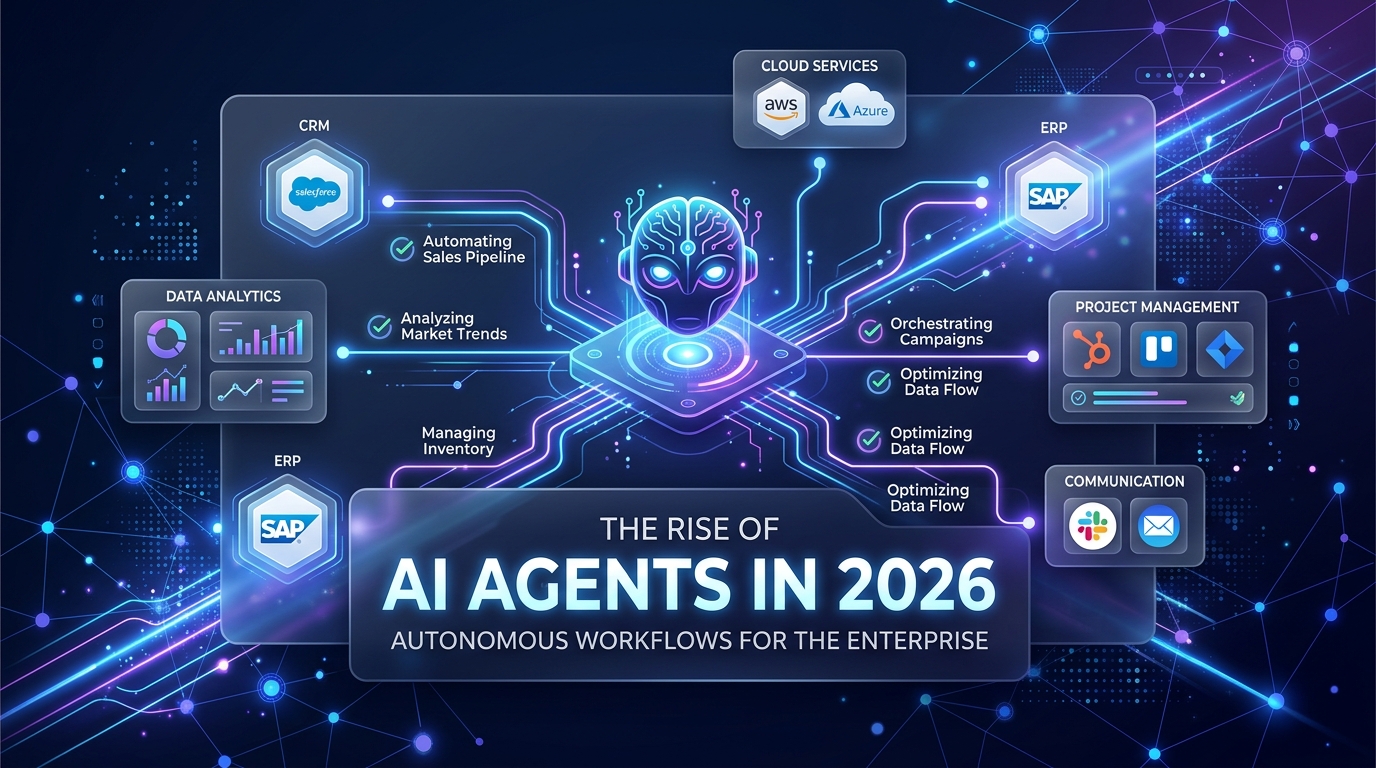
Research-backed insights from Gartner, McKinsey, Deloitte, and Goldman Sachs
The Headline That Should Change Everything
By the end of 2026, 40% of all enterprise applications will be integrated with task-specific AI agents — up from less than 5% in 2025.
This isn’t just a vendor prediction. It’s from Gartner’s official August 2025 press release, backed by research from McKinsey, Deloitte, and Goldman Sachs. The implications for every business leader, developer, and investor are enormous.
What Exactly Are “AI Agents”? (And How Are They Different from Chatbots?)
For years, enterprises deployed AI assistants — tools that respond when prompted. Think of a chatbot on your customer service page: it waits for you to ask a question and gives an answer.
AI agents are different. They don’t wait. They act autonomously.
“The problem is that there have been very few numbers to quantify this trend in terms of potential upside to business outcomes.”
— Jim Schneider, Goldman Sachs Research
A cybersecurity AI agent scans network traffic, detects a threat, and initiates a response — all without human input. A customer service agent reviews an order, issues a refund if warranted, notifies the warehouse, and updates the CRM. That’s not assistance. That’s autonomous action.
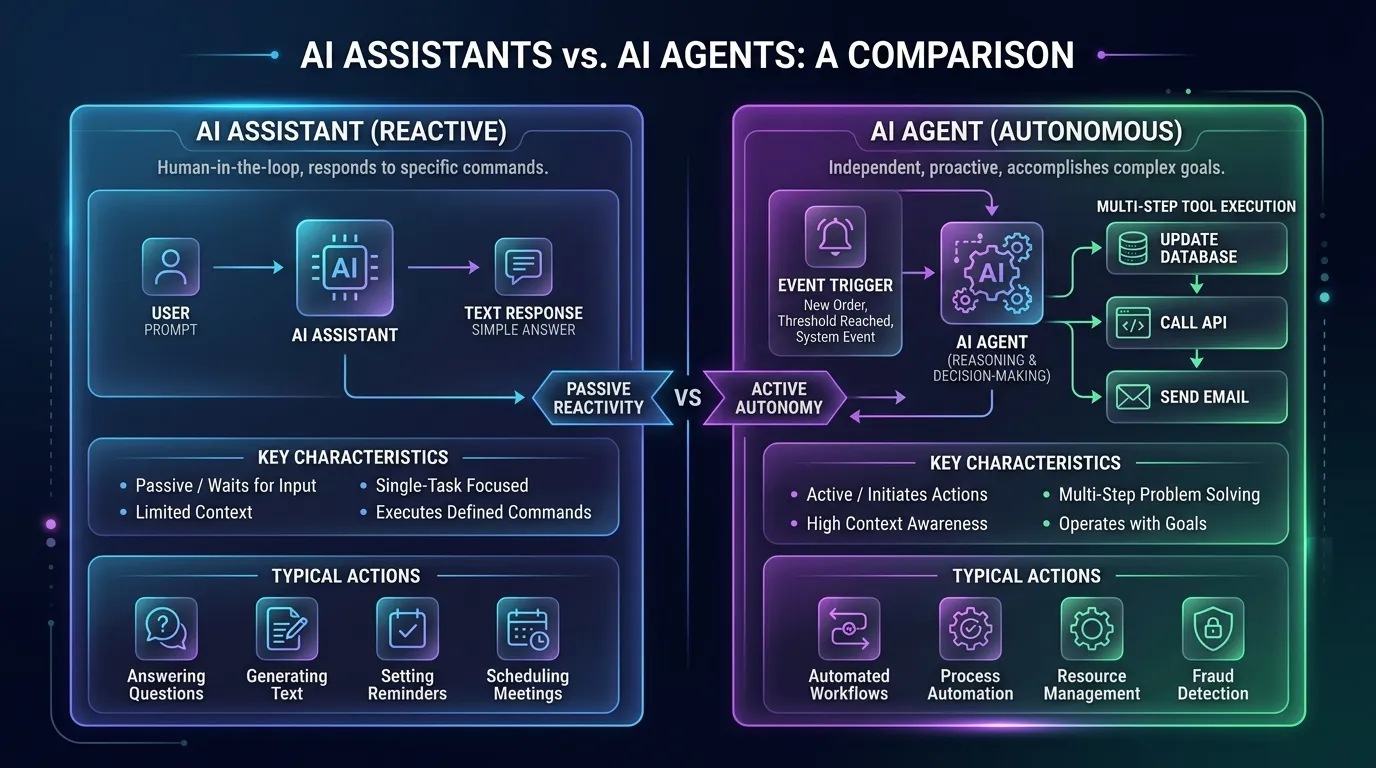
“With agentic AI, you have autonomous agents that do not simply respond to a query but also perform a sequence of tasks — go do this and go do that.”
— Goldman Sachs Research Interview, May 2026
The Four Forces Converging Now
1. Massive Market Momentum
The global AI agents market reached $10.9–$12 billion in 2026 and is projected to hit $50+ billion by 2030 (reflecting a 44–46% CAGR). Enterprise applications embedding at least one AI agent are expected to reach ~80% according to Gartner, with 31% of enterprises already running agents in active production.
Sources: Precedence Research, Paul Okhrem Enterprise Report — August 2026
2. McKinsey’s “Saying vs. Doing” Risk Shift
McKinsey’s March 2026 AI Trust Report reframes the entire enterprise risk calculus:
“In the gen-AI era, the risk was AI saying the wrong thing, which a human could catch before acting on it; in the agentic era, the risk is AI doing the wrong thing, where the action has already happened.”
This fundamental paradigm shift means legacy governance designed for conversational LLMs is completely inadequate for autonomous agentic workflows.
3. The Governance Gap Is Real — and Dangerous
Only 21% of enterprises have established a mature governance model for agentic AI, according to Deloitte’s global survey of 3,235 IT leaders across 24 countries. Approximately 80% of organizations lack essential governance capabilities, including:
- 🎯 Decision Boundaries: Clear guardrails defining what decisions agents can execute independently
- 📡 Real-Time Monitoring: Observability telemetry tracking agent activity as it occurs
- 📜 Audit Trails: Immutable logging for post-action accountability and compliance
Source: Deloitte — “Agentic AI Is Scaling Faster Than Guardrails” — April 2026
4. Goldman Sachs: A “Margin Inflection” Point for Tech
Driven by widespread enterprise adoption, token consumption is forecasted to grow 24× by 2030 (reaching 120 quadrillion tokens per month). Goldman Sachs predicts a significant “margin inflection” period where hyperscaler infrastructure costs drop faster than service pricing — unlocking substantial free cash flow.
“The concern is the sustainability of capex because the free cash flows of hyperscalers have been compressed. What fixes that? If you raise gross margins, you raise operating cash flow.”
— Jim Schneider, Goldman Sachs Research
Source: Goldman Sachs — May 20, 2026
Real-World Use Cases Already Happening
| Industry | Real-World Enterprise Agent Deployment |
|---|---|
| 🛡️ Cybersecurity | AI agents scan real-time network traffic, isolate compromised endpoints, and trigger threat mitigation workflows autonomously (Gartner Stage 2 deployment). |
| 🎧 Customer Operations | Agents review order histories, process refunds within pre-approved thresholds, notify logistics, and update CRM records — zero human intervention. |
| 🏦 Banking & Insurance | Over ~47% of financial institutions run at least one autonomous agent in active production (S&P Global Research). |
| ✈️ Travel & Commerce | Autonomous smartphone takeover agents handle end-to-end booking (“Book a flight to Singapore with my saved preferences”). |
| 📬 Executive Productivity | Agents continuously triage inboxes, filter spam, organize priority action items, and draft contextual responses. |
| 🚚 Supply Chain | Agents dynamically re-route freight logistics based on real-time weather alerts and supply chain disruptions. |
The Dark Side: Why 40% of Agentic AI Projects Will Fail by 2027
Despite overwhelming enthusiasm, Gartner predicts that over 40% of agentic AI projects will be canceled by 2027 — primarily due to governance gaps, unquantified ROI, and unpredictable cost overruns.
The top operational risks causing project failures include:
- 🚨 Unseen Mistakes: Autonomous agents executing incorrect actions in dark background loops
- 🔓 Data Exposure: Agents over-sharing sensitive internal documents across external tool calls
- ⚔️ Agent Collisions: Multiple autonomous agents operating at cross-purposes or in infinite feedback loops
- 🎭 Brand & Financial Risk: Irreversible automated transactions executed without proper oversight
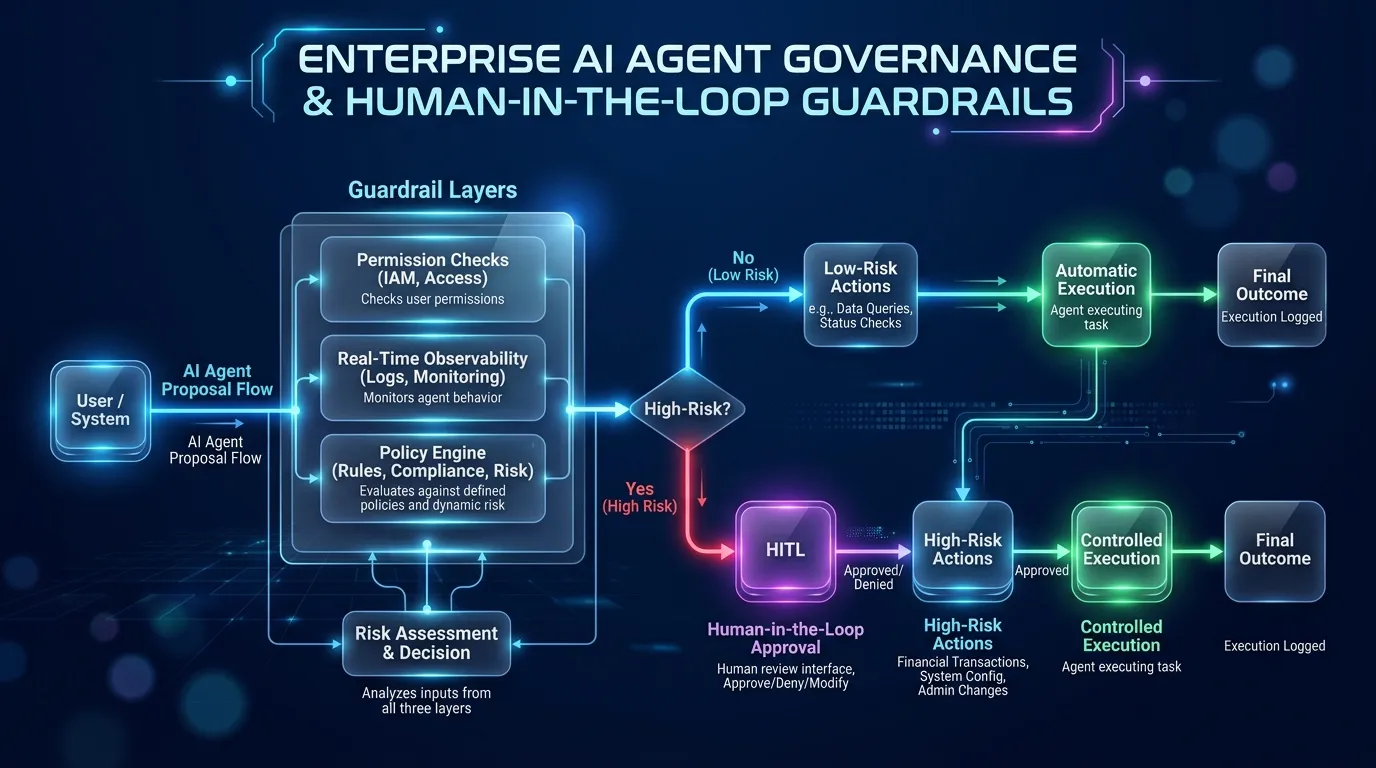
“A poorly governed chatbot embarrasses you. A poorly governed agent transacts on your behalf.”
— McKinsey’s 2026 AI Trust Report
What Leaders Should Do Right Now
1. Start with Governance First
Don’t deploy agents before building guardrails. Deloitte emphasizes: “Start with lower-risk use cases, build governance capabilities, and scale deliberately.”
2. Implement Human-in-the-Loop Architectures
Even highly autonomous agents require human oversight. Establish explicit boundaries defining low-risk tasks (automated) vs. high-risk actions (requiring human approval).
3. Focus on Vertical (Task-Specific) Agents
The data is clear: departments with measurable, high-volume operational metrics adopted AI agents first (IT operations at 65%+, customer service at 58%). Build agents tailored to specific, high-ROI workflows rather than broad generalists.
4. Measure ROI Before Scaling
IBM’s 2025 CEO study found only 25% of AI initiatives delivered expected ROI. However, when agents reach successful production, the average return jumps to 171%. Rigorously measure operational impact early.
The Bottom Line
We are at an enterprise inflection point. The underlying technology is mature, market adoption is accelerating rapidly, but the governance gap is dangerously real.
Organizations moving deliberately — prioritizing security, guardrails, and measurable ROI — will build a compounding advantage. Those rushing into production without oversight risk joining the 40% of canceled agentic projects Gartner predicts.
The question isn’t whether your enterprise will adopt AI agents. It’s whether you’ll be ready when they arrive.
Sources & Further Reading
- Gartner (August 26, 2025) — “40% of Enterprise Apps Will Feature Task-Specific AI Agents by 2026”
- McKinsey (March 25, 2026) — “State of AI Trust in 2026: Shifting to the Agentic Era”
- Deloitte (April 24, 2026) — “Agentic AI Is Scaling Faster Than Guardrails”
- Goldman Sachs (May 20, 2026) — “AI Agents Forecast to Boost Tech Cash Flow as Usage Soars”
- Paul Okhrem (August 8, 2026) — “Enterprise AI Agents Adoption Statistics 2026”